
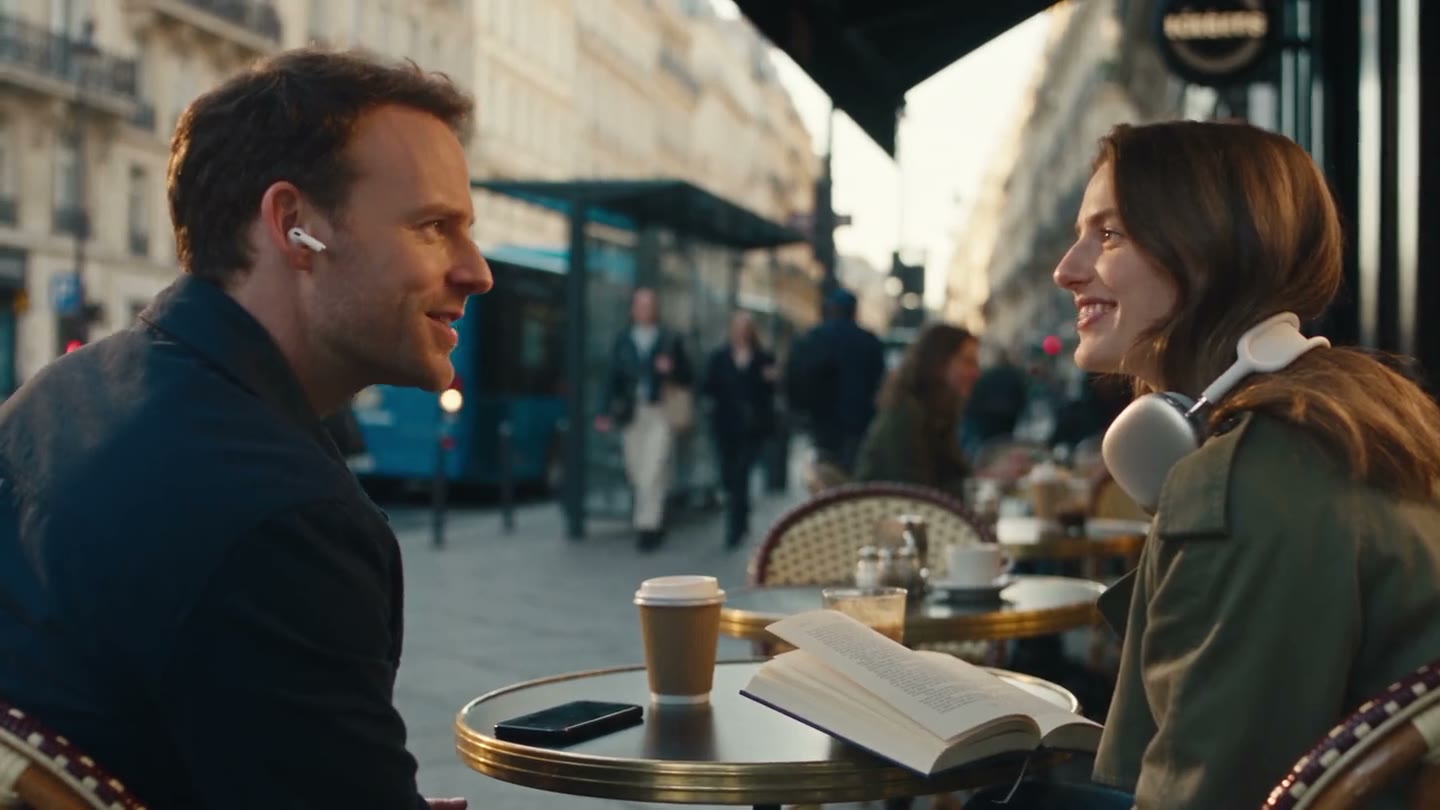
The excuse, or straight in: two ways to open
Every opener is one of two things. Knowing which one you are doing is most of the job.
There are only two ways to start a conversation with someone you have never met. You can borrow the situation you are both already in, or you can own the fact that you crossed the room. Everything else is a variation on one of those two, and almost every opener that dies does so because it tried to be both.
The situational opener
You use the thing you are both standing in. The queue is slow. The train is late. The machine is broken and neither of you knows how to fix it. You are not pretending to need help, and you are not manufacturing a reason — the reason is genuinely there, and you are saying it out loud.
This works because it asks for almost nothing. You are two people in the same situation making a remark about the situation. If they answer with one word and turn away, nothing has happened. Nobody has been rejected, because nobody made a bid.
It has one requirement and one failure mode.
- It has to be true. A shared thing you both noticed works. An invented question you obviously know the answer to does not, and people can tell instantly.
- It has to be inside the window. Situational openers expire. The comment about the queue works while you are in the queue. Thirty seconds after you have both been served it is a strange thing to say.
The direct opener
The other option is to say what is actually happening: you noticed them, and you came over. Not a line, not a pretext. Something closer to “I know this is a bit out of nowhere, but I wanted to say hello.”
People are afraid of this one because it feels exposed, and it is. That is also why it works. You have told the truth about an awkward thing before they had to wonder about it, which means the rest of the conversation does not have to carry the question of what you are doing there.
The direct opener needs three things, in this order:
- Name the situation. One clause acknowledging that this is slightly unusual does most of the work. It signals you are aware, which is the difference between confident and oblivious.
- Say the specific reason. Not a compliment about their face. Something you actually observed — what they were reading, what they were laughing at, what they ordered.
- Leave them an exit. Say your piece and stop. The silence after is theirs to fill or not, and letting it sit is the whole test.
Why mixing them fails
The most common failed opener is a direct approach wearing a situational costume. You crossed a room, walked past three other people, and arrived asking whether they know what time it closes.
They know. They watched you walk over. The pretext does not hide the intent, it just adds a small dishonesty to the first ten seconds, and now the conversation has to climb out of that before it can go anywhere. If you have already decided to approach, the direct opener is the easier one, because it costs nothing to maintain.
Reading the window
Every setting gives you a different amount of time, and misjudging it is a bigger mistake than choosing the wrong opener. A queue is thirty seconds. A beach or a park is effectively unlimited. Between sets at a gym is twenty seconds and you should assume they want to get back to it.
The skill is not talking for as long as possible. It is finishing slightly before the window closes, so the conversation ends because you ended it.
How to leave
Nobody practises the exit and it matters more than the opener. Say that you should let them get on, say one specific thing you took from the conversation, and go. If there is a reason to continue it, that is the moment to say so — but the exit works on its own, and a conversation that ends cleanly is a good outcome, not a failure.
Practising the first thirty seconds
Openers are a small motor skill and they respond to repetition the way any small motor skill does. The problem is that real life gives you one attempt, no feedback, and a whole evening to think about it afterwards.
That is the specific gap worth closing. Say the same opener out loud twenty times, change one thing each time, and hear which version sounds like a person rather than a script. The twentieth is not braver than the first. It is just more practised, and from the outside those two things look identical.
Related: the observation opener and guessing where someone is from.

Read next
Break the ice: say hello in their language